Building a Strong Professional Presence on LinkedIn for Construction Businesses

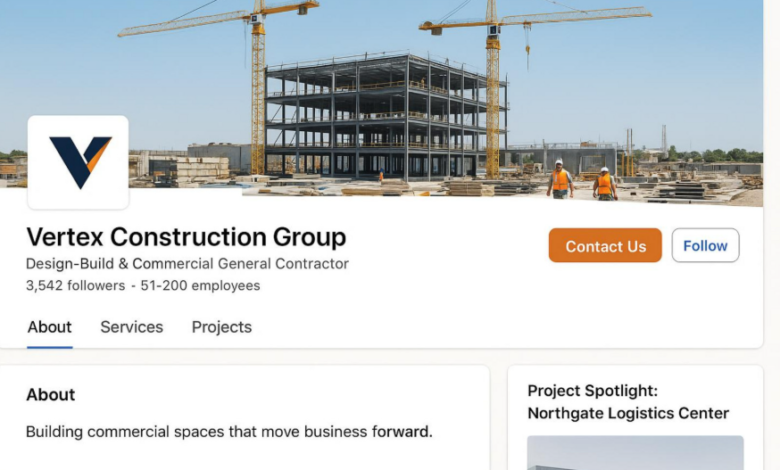
Building a strong professional presence on LinkedIn for a construction business means using the platform as more than a company noticeboard. It can serve as an open prequalification file and a public record of what your business can do. Instead of sharing broad claims about quality and integrity, successful commercial, civil, and specialty contractors use LinkedIn as a working project portfolio. By showing how their teams handle site problems, apply strict safety procedures, manage supply delays, and keep skilled workers, builders create a visible record of ability. This record can help developers, general contractors, procurement teams, and job candidates.
Major construction awards rarely result from quick decisions. Your online presence must speak to the group of people who review bids and assess risk. Using professional LinkedIn marketing for construction companies by BuiltFor Studio gives your team a clear way to turn scattered site updates into useful business development assets. With careful planning, a construction company’s LinkedIn presence can lower concerns about hiring the firm well before an invitation to tender reaches an estimating team.
How to Optimize a Construction Company LinkedIn Page
Your company page acts like a digital prequalification file. When an architect, commercial developer, or potential superintendent visits the page, they should quickly understand your main market sectors, service area, self-performed work, and business scale.
Improving the page means replacing general company language with short, measurable details about your engineering and construction skills. Each part of the page-from the banner image to the custom button-should provide information that supports commercial review.
Write a clear construction-focused company description
Avoid empty lines such as “building dreams with passion.” Start with your business type, target sectors, and delivery methods. State whether you are a design-build general contractor, an EPC firm, a construction manager at risk (CMAR), or a specialty subcontractor working in areas such as electrical, mechanical, or structural construction.
Use the “About” section to list your main project types, such as healthcare facilities, data centers, cold storage sites, industrial plants, or multi-family housing. Clearly state your service area, usual project size, and key services. This gives preconstruction managers the details they need to decide whether your firm suits an upcoming project.
Use a professional logo, banner, and completed-project imagery
LinkedIn images should show the size and skill of your operation. Your company logo needs to be clear and easy to recognize on mobile screens. Avoid common stock images of blueprints and safety helmets sitting on clean meeting-room tables. Experienced construction professionals may see these images as a sign that the page lacks real project evidence.
The header banner is valuable space. Use a high-quality, wide image of an important completed building or an active, well-managed site. The image can show good logistics, clean staging, and strong safety practices. Change the banner every few months or once a year to feature recent handovers, major completions, or new equipment.
Add services, certifications, locations, and contact details
Complete LinkedIn’s “Services” section with clear trade categories. List skills such as BIM modeling, preconstruction estimating, concrete forming, curtain-wall installation, or seismic upgrades. Clear service categories help people searching for specific capabilities find your company.
List every regional office, satellite yard, and main contact point correctly. Send visitors to specific landing pages or provide direct email routes to your preconstruction and estimating teams instead of using a general inbox that may not be checked often.
Showcase safety standards, licenses, awards, and memberships
Institutional clients and general contractors use strict prequalification checks. Make it easy for them to confirm your standing by listing active memberships in groups such as the Associated General Contractors (AGC), Associated Builders and Contractors (ABC), and relevant trade unions. Place safety awards and industry recognition where visitors can see them.
List LEED qualifications, ISO certifications, state contractor licenses, and participation in OSHA Voluntary Protection Programs. Clear proof of your management and safety standards can reassure risk teams before they begin a detailed review.
Connect the page with the company website and other digital channels
Your LinkedIn page should work with your other online channels. Add action buttons such as “Visit website” or “Contact us.” Use tracking parameters so your CRM or analytics tools can record visits that come from LinkedIn.
Link to specific case studies, plan rooms, or prequalification forms on your website. Connecting LinkedIn with these technical resources lets interested project executives move easily from reading an update to downloading your statement of qualifications.
How Employees Build a Strong Professional Presence on LinkedIn
In business-to-business sales, people often choose to work with people they trust rather than with an unknown company name. Updates from an official company page often reach fewer people than posts shared through the combined networks of employees. A company’s workforce may have a network about twelve times larger than the company page by itself.
When estimators, project managers, and superintendents keep credible profiles, the business shows a wide base of technical knowledge. Giving employees the confidence to take part in professional discussions builds trust at every level of the organization.
Create credible profiles for owners, estimators, project managers, and site leaders
Start by checking that company leaders and key project staff have complete and active profiles. Professional headshots in suitable work clothing-whether business-casual clothing or clean field gear with the right PPE-make the profile feel genuine. A complete profile also suggests that the person is organized and careful.
Ask site leaders, quality control staff, and project engineers to describe their current roles. Potential clients often research the people named in a tender response. Seeing a team with proven experience and a stable work history can build strong confidence.
Write headline and About sections around construction expertise
A LinkedIn headline should say more than a job title. Instead of “Project Manager at BuildCorp,” use wording such as: “Senior Project Manager | Delivering Complex Healthcare & Cleanroom Facilities | CMAR & Design-Build Specialist.” This gives people searching for a vendor or skilled professional a quick view of the person’s abilities.
In the “About” section, employees can explain how they control risk, protect schedules, and solve difficult field conditions. Listing skills in software such as Procore, Revit, or Primavera P6 also gives direct evidence of their ability to manage construction work.
Add project experience, qualifications, licenses, and recommendations
A construction professional’s profile should work like a selected project list. Ask team members to name major projects they helped complete. They can include structural details, square footage, unusual design features, or difficult site conditions without sharing confidential information or protected figures.
Display qualifications such as Professional Engineer (PE), Certified Construction Manager (CCM), LEED AP, and OSHA 30. Ask coworkers, trade partners, and specialty engineers to provide honest recommendations that speak to communication, technical accuracy, and teamwork in the field.
Use personal branding without competing with the company page
Some construction leaders worry that employee visibility will weaken the company brand or make it easier for competitors to recruit their staff. In practice, knowledgeable and confident employees reflect well on the company. Personal jobsite observations make the brand feel human in a way that formal company posts cannot.
Team members can explain how they fixed a difficult mechanical clash, dealt with unexpected soil stabilization, or organized a large overnight concrete pour. These insights support the company’s market position while giving individual professionals credit for their work.
Connect employee profiles to the official company page
Check that every employee links their profile to the correct, registered LinkedIn company page. This link places the company logo on the employee’s profile and sends visitors to the main company page.
The connection also fills the public employee directory. Developers can then see evidence of the company’s staff size, employee retention, and experienced supervisory team.
How to Grow a Relevant Construction LinkedIn Network
Thousands of random followers have little value for a commercial builder. A useful network includes people who specify products, design systems, approve projects, manage public funds, and award subcontracts in your service area.
Network growth should have a clear purpose and focus on the local and regional industry groups your company serves. Connecting with the right people turns your feed into a source of market information and a path for new inquiries.
Connect with clients, architects, engineers, suppliers, and subcontractors
Whenever your company starts work or reaches a project milestone, your leaders work with many outside organizations. Make it normal practice to connect with the architects, structural and MEP engineers, suppliers, and subcontractors involved.
These connections create a network of people who can confirm your work. When an architect or structural engineer regularly sees updates about careful installations and organized site work, whether you post them yourself or plan them with an agency such as builtfor.studio, they may be more likely to recommend your firm during early contractor reviews on a future project.
Build relationships with recruiters, employers, and trade associations
Do not wait until a key position is empty before building relationships with construction recruiters and trade educators. Connect with regional union leaders, vocational schools, trade academies, and university engineering departments to keep future hiring channels active.
Take part in regional groups such as local Urban Land Institute (ULI) chapters, the Commercial Real Estate Development Association (NAIOP), and the Construction Financial Management Association (CFMA). These relationships connect your company with larger conversations about industrial projects and commercial property.
Engage with regional business groups and construction influencers
Economic development boards, downtown groups, and local business organizations often share news about company moves and infrastructure spending on LinkedIn. By watching and joining these discussions, your business development team can learn about future project needs early.
Also follow respected construction voices, industry experts, and civil engineers who share useful views on new methods and technology. Thoughtful technical comments can place your firm in front of an audience that already cares about construction.
Personalize connection requests and follow-up messages
Do not send the same generic connection request to every developer, facility manager, or consultant. Take a short time to mention a shared contact, a common project, a recent award, or an upcoming conference session.
After the person accepts, do not send a hard sales message right away. Construction relationships take time. Offer something useful first, such as a relevant buildability report, a note congratulating them on project approval, or a simple message saying you look forward to following their work in the region.
Use LinkedIn groups and events to support business development
Some LinkedIn groups are quiet, but active regional and trade groups can provide places to discuss work methods, local code changes, and new zoning rules. Join these discussions with practical information instead of sales language.
Use LinkedIn Events to host or attend online pre-bid meetings, buildability workshops, and discussions about local supply issues. Events give you a natural reason to connect with attendees and begin conversations based on shared professional interests.
What Construction Businesses Should Post on LinkedIn
A major mistake in construction social media is treating the platform like a billboard for praise. Repeated posts such as “Proud to announce we won this award” or “Honored to work with great clients” teach potential partners very little and are often ignored.
Strong content makes technical work easier to understand. By explaining site problems, sequencing choices, and risk controls, your posts show that the firm has real knowledge and can guide clients through difficult work.
Use four content pillars: projects, expertise, people, and community
A varied schedule keeps the feed useful. Plan content around four main themes that show how the company operates:
- Project Delivery: Key milestones, difficult installations, structural progress, and successful handovers.
- Technical Expertise: Buildability lessons, cost control methods, design improvements, and code-compliance answers.
- Our People: Safety leadership, apprenticeship completions, technical qualifications, and team problem-solving.
- Community & Industry: Local economic benefits, education partnerships, environmental work, and charitable trade projects.
Moving between these themes speaks to the full buying group, including people focused on financial control, safety, workmanship, and community relationships.
Share project progress without revealing confidential client information
People respond well to videos showing construction progress, steel erection, and difficult MEP installations. This material must respect client confidentiality, non-disclosure agreements, and site security rules.
Do not share private drawings, financial budgets, trade secrets, security arrangements, or recognizable company property without written approval from the owner. Focus on the method used to complete the work, such as managing limited site access or making a crane lift in a busy city area, without exposing private project details.
Explain construction methods, regulations, materials, and cost factors
Show your knowledge by teaching your audience. Explain how new local energy codes affect building envelopes, or why a team selected mass timber instead of cast-in-place concrete to reduce a project’s carbon output.
Explain the practical cost and performance differences between building materials, ground stabilization methods, and HVAC systems. Helpful education presents your firm as a planning partner rather than just another contractor competing on the lowest price.
Highlight safety milestones, employee achievements, and team culture
Safety is one of the main measures used to judge commercial contractors. Move beyond quoting a low Total Recordable Incident Rate (TRIR), which only reports past incidents. Share the actions your team takes to prevent harm, such as high-risk pre-task plans, practice hazard drills, and ergonomic improvements.
Celebrate employees who gain new qualifications, finish apprenticeships, or reach long safety milestones. Showing a commitment to learning tells clients and job candidates that the company invests in its workers and their safety.
Publish case studies with measurable project outcomes
A case study should follow a simple story: the original constraint, the solution used, and the measured result. Instead of saying only that a building finished on schedule, explain the controls that protected the critical path.
Did the preconstruction team redesign an MEP route and save four weeks? Did the project team use prefabricated exterior wall panels to remove the need for scaffolding on a zero-lot-line site? Use clear figures to show these results and provide strong evidence of your skills.
Use photos, short videos, documents, polls, and native LinkedIn formats
Use different formats to keep people interested. High-quality images often receive about twice as many comments as plain text updates, while good site videos can receive around five times more engagement across the network.
Use LinkedIn’s document carousel to share PDF slide decks about buildability reviews, site staging plans, or quality checklists. Use native polls from time to time to learn how industry members view code changes, delivery methods, or expected material lead times.
Apply specific hashtags and relevant keywords without overusing them
Use relevant construction keywords naturally in your updates, such as #CommercialConstruction, #BIMCoordination, #CivilEngineering, and #MassTimber. These terms help LinkedIn place your content in the right searches.
Avoid filling posts with hashtags. Three to five relevant tags per post are usually enough. The main focus should remain on the useful information in the update.
How to Create a Consistent LinkedIn Content System
Construction work is demanding, so social media often gets pushed aside when project teams are busy. A regular publishing plan needs a simple production system that turns daily field activity into useful stories without adding heavy work for the site team.
Clear routines and review steps help a company publish reliable, informed posts while allowing project staff to focus on building the work.
Set a realistic weekly publishing schedule
Posting regularly matters more than posting every day. A regional contractor will usually get better results from two or three accurate, well-developed posts each week than from daily updates with little useful information.
Choose a schedule that the team can maintain. For example, share a project milestone on Tuesday, a technical or safety explanation on Thursday, and a people-focused post on Friday. Protect the schedule by preparing posts ahead of time.
Plan content around project stages, seasonal demand, and industry events
Match the content plan to the company’s real work. If field teams are preparing for major preconstruction activity in early spring, publish information about early purchasing, planning, and risk control.
Build the calendar around real milestones such as groundbreakings, structural top-outs, substantial completions, and ribbon cuttings. Add local trade shows, national safety weeks, and regional industry events so the content stays timely.
Assign approval responsibilities for technical and compliance accuracy
Unapproved site photos can create public relations, legal, and safety problems. Set a clear review path before any post is published.
A basic process involving the marketing lead, project executive, and safety director can check that every post is technically correct, follows client confidentiality rules, and shows proper OSHA practices. One image of a worker without fall protection or eye protection can damage a reputation built over many years.
Repurpose approved website, email, and project content for LinkedIn
You do not need to create every topic from nothing. Construction companies already produce large amounts of technical material that can be adapted for public use.
Turn website case studies into five-slide document carousels. Adapt a section of an internal safety memo into a public lessons-learned post. Use the technical story from a successful project closeout package as the basis for a detailed buildability article. Reusing approved material helps the company gain more value from work it has already completed.
Use a 90-day content calendar to test topics and formats
Plan content in rolling 90-day periods. A quarterly plan gives you enough time to test topics such as prefabrication, sustainable materials, and site safety with your target audience.
At the end of each quarter, check which formats produced the most qualified profile visits, direct messages, and useful comments from potential clients. Use those results to choose topics for the next 90 days.
How to Turn LinkedIn Engagement into Construction Leads
Impressions, likes, and comments have little business value if they do not lead to prequalification opportunities, preferred bidder status, or direct invitations to bid. Moving from attention to real opportunities requires a clear plan.
Turning interest into serious inquiries means creating simple contact routes, giving useful technical replies, and moving public conversations into the company’s formal sales process.
Define audiences for commercial, residential, civil, and specialty work
A builder working across several sectors cannot use the same message for every audience. An institutional owner planning an ambulatory surgery center needs different proof from a real estate investment trust developing an industrial logistics park.
Separate your messages by audience and speak to each group’s main concerns. Define target accounts by sector, project size, and location. Then shape posts around the scheduling, budget, site, and regulatory issues those clients face.
Add clear calls to action for consultations, bids, and partnerships
Do not assume that readers know what to do next. Each detailed technical post should end with a clear and easy action.
Invite owners and architects to download your project portfolio, discuss site conditions with the preconstruction team, or send an upcoming RFP to estimating. Make sure the profile link sends them to a responsive project intake page.
Respond to comments and messages with useful technical information
When an architect, project director, or subcontractor asks about a structural choice, concrete cure period, or mechanical system, treat the reply as a public test of your team’s knowledge. Do not respond with an empty “Thanks for reading!” message.
Give a clear answer and explain the engineering reason for the decision. These public conversations show every reader that your team communicates well and works through problems with care.
Move qualified conversations from LinkedIn to a structured sales process
When a direct message or comment thread shows real commercial interest, move the discussion from LinkedIn into your formal business development process.
Ask for a short phone or video meeting, continue the conversation through company email, and record the interaction in your CRM. After it is recorded, send the opportunity to the right sector leader so they can prepare a qualifications package.
Use testimonials, recommendations, and project proof to reduce buyer risk
Independent feedback can reduce hesitation during a procurement review. Share direct comments from owners, owner representatives, and project architects who can confirm that your team handled changes fairly, protected the schedule, and delivered good finishes.
Pair completed project images with endorsements from satisfied clients. A statement from an institutional owner saying that your company completed a phased renovation in an occupied facility without interrupting daily operations carries more weight than a claim written by the company itself.
Combine organic posts with targeted LinkedIn advertising when appropriate
Regular unpaid posts build a lasting base, while paid campaigns can speed up outreach in a specific region or project sector. LinkedIn advertising lets you target job titles, seniority levels, and business units within selected organizations.
Run campaigns that show relevant case studies to facilities directors, vice presidents of capital projects, and real estate development leaders in your service area. Paid campaigns place your strongest proof in front of people who may be involved in future project decisions.
What Should a Construction LinkedIn Strategy Avoid?
A poorly managed social media page can harm a construction company. The wrong content may create bid compliance problems, attract regulatory attention, or make experienced owners question the firm’s professionalism.
Protect the company’s reputation by setting clear limits on what appears in the feed. Maintain high standards for professional behavior, safety, and client privacy.
Posting only promotional content or copied industry news
Few people visit LinkedIn to read repeated company praise or industry headlines copied without added meaning. A page that shares only awards, sponsorship signs, or links to outside news will quickly lose the attention of industry contacts.
If you share a market report or industry update, add your own view. Explain what it means for trade partners, how it may affect local material purchasing, or how your team is changing its field work in response.
Using vague claims about quality, safety, or project results
Phrases such as “world-class quality,” “unmatched safety,” and “industry-leading service” have little meaning without proof. Commercial owners often ignore broad claims that are not supported by facts.
Remove unsupported statements from your posts. Replace them with specific information, such as concrete strength test results, a percentage reduction in rework, a record of on-time milestones, or documented field inspection pass rates.
Ignoring comments, employee advocacy, and direct messages
Using LinkedIn as a one-way broadcast misses the value of social networking. If a potential client, subcontractor, or apprentice comments and receives no response, the company may appear uninterested or hard to reach.
Check messages and comments regularly. Support employees who share useful ideas and help their posts reach more people. This builds an internal culture that values technical knowledge and professional participation.
Sharing unsafe site images or identifiable client information
This is one of the most serious compliance risks for a builder. Do not publish field photos or site videos without a safety review. A single worker without gloves, eye protection, or fall protection can attract attention and create concerns for potential clients.
Also avoid showing security systems, private client equipment, or drawings that reveal project codes. Protect client privacy and site security with the same care you use for your own information.
Buying followers or using irrelevant engagement tactics
Buying fake followers or joining automated engagement groups does not help a construction company. Fake accounts will not buy concrete, award a construction management contract, or hire a steel contractor.
Low-value tactics, such as unrelated viral videos or generic polls, attract few real decision-makers. Build an audience of actual clients, industry peers, trade partners, and future employees instead.
Expecting immediate leads without consistent relationship building
Construction purchasing cycles are long and deliberate. A commercial project may take months or years to move from land approval through design, bidding, and groundbreaking. Expecting a contract after two weeks of posting shows a poor understanding of the industry.
Use LinkedIn as a long-term business asset. Earning the trust and visibility needed to win large project packages takes steady work over many quarters.
How to Measure and Improve LinkedIn Performance
A successful LinkedIn presence needs regular review based on actual data. Without analytics, you cannot tell which topics interest decision-makers or which activities lead to business conversations.
Create a regular review routine that looks at audience details, engagement results, and the connection between LinkedIn activity and business development work.
Track page views, follower growth, reach, and engagement rate
Review the standard metrics each month. Check total impressions, unique reach, and the unpaid engagement rate for individual posts to see how the content performs with the wider market.
Watch follower growth patterns. A steady flow of new followers after a major project post or educational series can show that your message is reaching the right audience.
Measure profile visits, website clicks, messages, and qualified leads
Look closely at metrics that show buying interest. Check how many people use the profile button to visit your website, view a plan room, or send a project inquiry.
Review direct messages from developers, architects, and job candidates. Classify each message as a business opportunity, partnership discussion, or recruiting conversation so you can judge its value.
Compare performance by audience, content pillar, and format
Use the data to see which job titles and industries interact with your page. Are you reaching real estate developers, commercial architects, and civil estimators, or are most interactions coming from other marketing professionals?
Compare results across the four content themes. If buildability posts regularly perform better than company culture updates, plan more technical content for the next publishing period.
Use LinkedIn Analytics to identify high-performing topics
Review LinkedIn’s built-in analytics for each post. Find the topics that receive the most shares, saves, and longer discussions.
If a post about deep foundations or modular prefabrication creates strong interest, treat that result as a useful signal. Create a follow-up article, a technical PDF carousel, or an online workshop about the same subject.
Connect LinkedIn activity with website analytics and CRM records
Connect social media data with your internal business development tools. Add UTM tracking parameters to shared links so Google Analytics or another analytics platform can show how LinkedIn visitors move through your website.
Ask business development and estimating staff to find out how each potential client first heard about the company. Compare new bid opportunities with LinkedIn connection records to show whether the channel is producing real business value.
Review results monthly and adjust the strategy quarterly
Set aside time every month to review output, publishing consistency, and audience growth. Use these checks to make quick changes to the content process.
Every quarter, complete a broader review. Compare online results with the estimating pipeline, joint venture proposals, and hiring needs. Updating the plan every 90 days keeps LinkedIn connected to the company’s wider growth goals.
Beyond the Feed: Protecting Long-Term Digital Asset Value
LinkedIn can offer value beyond standard performance numbers. A strong presence creates trusted information for newer business research tools. Major artificial intelligence systems and conversational search services often use LinkedIn data to check executive leadership, confirm business capabilities, and map company qualifications. If an enterprise search tool creates a list of leading design-build contractors for advanced life-science facilities in a certain area, firms that publish clear technical information are more likely to appear as verified industry sources.
This lasting record of company knowledge can also add value during ownership changes, employee share ownership plan (ESOP) creation, or mergers. A potential investor, surety underwriter, or acquiring partner does not judge a company by financial records alone. They may also review its online reputation, employee participation, and company culture. A current and connected LinkedIn presence shows that the construction firm is not dependent on the private contacts of a retiring founder. It presents a stable business with visible leadership, an open culture, and steady access to regional opportunities.