

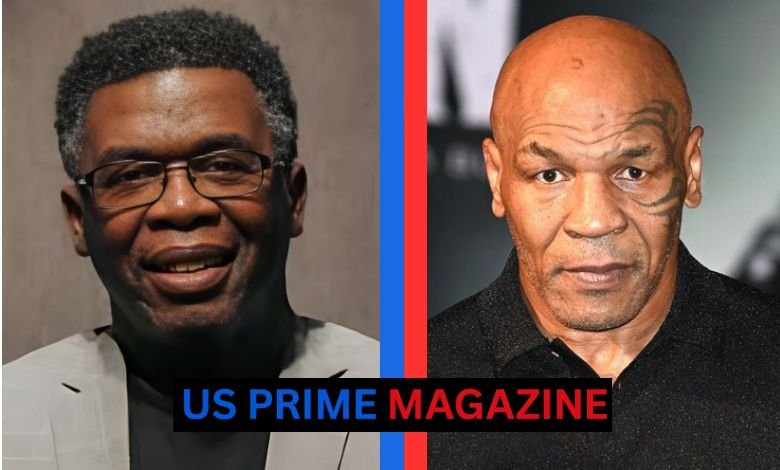
Jimmie Lee Kirkpatrick is a former football player and Oregon educator who is widely described as Mike Tyson’s older half-brother. In Charlotte, North Carolina, his name brings to mind a different sport and a defining season in 1965. As a senior at Myers Park High School, Kirkpatrick scored 19 touchdowns and helped the Mustangs finish undefeated. When the Shrine Bowl left him off its all-star roster, his exclusion prompted a civil rights lawsuit that changed who could play in the game.
Football took Kirkpatrick to Purdue University, but an injury and a growing interest in teaching sent him in another direction. Years later, family research brought him back to Charlotte and into conversation with a former classmate who shared his surname. What they discovered about their ancestors became the subject of the documentary A Binding Truth.
Quick Info About Jimmie Lee Kirkpatrick
| Detail | Information |
|---|---|
| Full name | Jimmie Lee Kirkpatrick |
| Birth year | 1948 |
| Age | About 78 as of November 2026 |
| Birthplace | Charlotte, North Carolina, United States |
| Nationality | American |
| Parents | Irma Kirkpatrick and Jimmy “Curlee” Kirkpatrick |
| Famous family connection | Reported paternal half-brother of Mike Tyson |
| Education | Second Ward High School, Myers Park High School, Purdue University and Oregon State University |
| Profession | Former football player, teacher and school administrator |
| Notable work | A Binding Truth and Stirring the Ashes |
Growing Up in Charlotte’s Grier Town
Jimmie Lee Kirkpatrick grew up in Grier Town, now known as Grier Heights. At the time, the Black neighborhood sat outside Charlotte’s city limits. In his oral history, Kirkpatrick described a community where family histories ran deep. One of his own ancestors, James McVay, helped establish the neighborhood after moving to Mecklenburg County from South Carolina.
Segregation shaped everyday life in Charlotte, from the schools children attended to the public facilities they could use. Kirkpatrick started high school at Second Ward, an all-Black school where he played football before transferring to Myers Park. Years later, he still credited the teachers, coaches and teammates at both schools for his success.
READ THIS TOO: Who Is Joel De La Hoya Sr.? Meet Oscar De La Hoya’s Father
His Mother Irma and Father Jimmy “Curlee” Kirkpatrick
Kirkpatrick’s father left the family when Jimmie Lee was about 11. His mother, Irma, raised him with help from his great-grandmother, who also worked for a white family. When Jimmie Lee had the chance to transfer to Myers Park, he asked his mother what she thought. In an interview featured in A Binding Truth, Irma recalled encouraging him to take the opportunity.
His father, Jimmy “Curlee” Kirkpatrick, grew up in the Charlotte area and played sandlot baseball. Jimmie Lee remembered him as a powerful hitter in the local Black leagues. The family also had longstanding ties to Antioch Baptist Church, which stood on land donated by an earlier generation of Kirkpatricks.
How Jimmie Lee Kirkpatrick Is Related to Mike Tyson
The reported connection runs through Curlee Kirkpatrick. The Charlotte Observer has described Jimmie Lee Kirkpatrick as Mike Tyson’s half-brother, and Tyson biographer Mark Kriegel identifies Jimmie Lee as Curlee’s firstborn son. Kriegel writes that the Tyson children were told Curlee was their father. Tyson has said that his birth certificate named Percel Tyson, so the biological relationship is best described as reported.
Jimmie Lee was already playing high school football in Charlotte before Tyson was born in 1966. His own sporting career took shape in North Carolina, while Tyson grew up in New York and went on to become a heavyweight boxing champion.
Why He Transferred to Myers Park High School
A change in school boundaries gave Kirkpatrick a choice before his senior year in 1965. He could stay at Second Ward with friends and teammates or move to predominantly white Myers Park, where he saw more academic and athletic opportunities. A transfer meant leaving the school where he had made a name for himself and joining a team where he had yet to earn his new teammates’ trust.
In A Binding Truth, Kirkpatrick recalled wondering whether those teammates would block for him. For a running back, that was a practical concern. He also worried about keeping up in class and earning a college scholarship. He took the chance, joined the Mustangs and helped them win a regional championship. His 19 touchdowns earned him All-American honors, and Charlotte recognized him as its best high school football player.
The Shrine Bowl Decision That Changed the Game
The Shrine Bowl brought together leading high school seniors from North and South Carolina. Kirkpatrick had the kind of season that normally put a player in contention for the game, but the Shrine Bowl still operated under segregation. Its selectors passed him over, and Charlotte civil rights attorney Julius Chambers filed a lawsuit challenging racial discrimination in the selection process.
A judge allowed the 1965 game to proceed and required organizers to integrate future games. The ruling came too late for Kirkpatrick, who was already in his senior year. In 1966, North Carolina named two Black players to its Shrine Bowl roster.
Within days of the ruling, attackers bombed the homes of Chambers and three other Charlotte civil rights leaders. The attacks remain unsolved. For Kirkpatrick, the dispute began with a chance to play one more high school game. The court ruling changed that opportunity for the players who came after him.
Life at Purdue and the Move to Oregon
Kirkpatrick continued playing football at Purdue University. Campus life gave him other interests, too. He played in a band and joined efforts to improve conditions for Black students. After a serious knee injury, he lost much of his enthusiasm for football and eventually left Purdue.
He moved to San Francisco, where he experienced homelessness, spent time in communal housing and took part in political activism. Connections he made in California eventually led him to Oregon. He spent time in Portland and Tillamook and worked in the logging industry before returning to school. By then, the former running back had begun to consider a career in teaching.
His Career in Portland Public Schools
Kirkpatrick studied at Oregon State University and completed a master’s degree in education in 1977. He went on to work as a teacher and school administrator in Portland. Over roughly 25 years in education, he often helped schools deal with issues that arose during racial integration.
In Charlotte, he had gone through integration as a student, wondering how a transfer might affect his classes, friendships and future. In Portland, he dealt with it as an educator responsible for students going through changes of their own. He later explained in his oral history that this work prompted him to think more about his family’s origins and look into its past.
The Family Discovery Behind A Binding Truth
Kirkpatrick traced his paternal family line to Sam Kirkpatrick, who was born into slavery in Mecklenburg County around 1853. After emancipation, Sam worked as a sharecropper. He eventually bought land, established a family home and donated an adjoining parcel for Antioch Baptist Church. Following Sam’s life through those records helped Jimmie Lee understand how his family came to put down roots in Charlotte.
In 2013, The Charlotte Observer revisited the Shrine Bowl controversy. The series caught the attention of Hugh “De” Kirkpatrick, a white former Myers Park classmate who had written about Jimmie Lee’s exclusion in a college application essay. The two had known each other in passing at school. They reconnected in 2014 and learned that one of De’s ancestors had enslaved one of Jimmie Lee’s ancestors.
Director Louise Woehrle followed the two men in A Binding Truth. The film brings together their memories of Myers Park, their family histories and the conversations they had after reconnecting. In one scene, De examines the unequal care of Black and white cemeteries. In another, Jimmie Lee returns to the neighborhood where his own story began. The documentary reached public television audiences in 2025.
Stirring the Ashes and the Charlotte Football Award
Jimmie Lee and De share their story through Stirring the Ashes, an educational program that brings discussions about slavery and race to schools, faith communities and other organizations. Their talks start with specific people and places in Mecklenburg County, including the families and communities they grew up in.
Charlotte also honors Jimmie Lee Kirkpatrick through an annual award for a senior football player in Charlotte-Mecklenburg Schools. The Charlotte Sports Foundation gives equal weight to what nominees accomplish on the field and what they contribute to their communities. The winner receives a $10,000 scholarship, a trophy and recognition at the Duke’s Mayo Bowl.
READ THIS TOO: Who Is Jacob De La Hoya? Meet the Son of Oscar De La Hoya and Toni Alvarado
Final Thoughts
The reported connection to Mike Tyson is one part of Jimmie Lee Kirkpatrick’s family history. His own story runs from a Charlotte high school football field to public schools in Oregon and back to the neighborhood where he grew up. In A Binding Truth, those chapters come together through a man who spent years teaching students and then turned his attention to what his own family could teach him about Charlotte.
FAQs About Jimmie Lee Kirkpatrick
Who is Jimmie Lee Kirkpatrick?
Jimmie Lee Kirkpatrick is a former football player and educator from Charlotte, North Carolina. He became known for his standout season at Myers Park High School and the civil rights case that followed his exclusion from the 1965 Shrine Bowl.
Is Jimmie Lee Kirkpatrick Mike Tyson’s half-brother?
He is widely reported to be Mike Tyson’s older paternal half-brother through Jimmy “Curlee” Kirkpatrick. Tyson has said that his birth certificate named Percel Tyson.
How old is Jimmie Lee Kirkpatrick?
Jimmie Lee Kirkpatrick was born in Charlotte in 1948, making him about 78 years old as of November 2026.
Why didn’t Jimmie Lee Kirkpatrick play in the Shrine Bowl?
The Shrine Bowl was still segregated in 1965, and selectors left him off the roster despite his 19-touchdown season. A lawsuit challenged the decision, and a judge ordered organizers to integrate future games.
What did Jimmie Lee Kirkpatrick do after football?
After playing college football at Purdue, he earned a master’s degree in education and worked as a teacher and school administrator in Portland, Oregon.
What is A Binding Truth about?
The documentary follows Jimmie Lee Kirkpatrick and his former classmate Hugh “De” Kirkpatrick. The two reconnect decades after high school and discover that one of De’s ancestors enslaved one of Jimmie Lee’s ancestors.





One Comment