How Businesses Can Build a Smarter Calling System with Virtual Phone Numbers

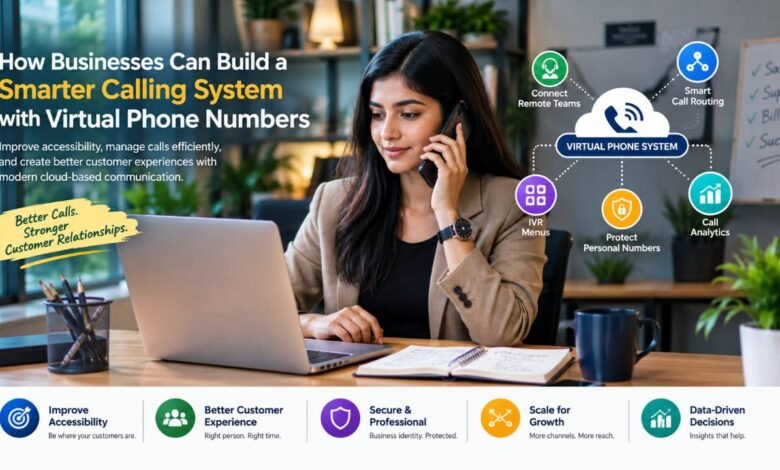
For many businesses, the first interaction with a potential customer happens over a phone call. A customer might call to enquire about a service, check an order, request technical support or speak with a sales representative. However, when calls are handled through personal mobile numbers or a single office telephone, managing these interactions can quickly become difficult.
Missed calls, unavailable employees, disconnected communication channels and inconsistent customer experiences can affect business operations. This is where virtual phone numbers offer a more flexible approach to business communication.
Instead of depending on physical telephone lines, businesses can use cloud-based phone systems to manage incoming calls, connect customers with the right departments and maintain a consistent communication experience.
Why Traditional Business Phone Systems Create Challenges
Traditional telephone systems often depend on fixed office infrastructure and individual phone connections. While this arrangement may work for smaller teams, it can become restrictive as a business expands.
Consider a company with separate sales, customer support and operations teams. Customers calling the business may have to go through multiple transfers before reaching the right person. If the concerned employee is unavailable, the call might go unanswered.
Some common challenges include:
- Missed customer calls: Employees may not always be available to answer incoming calls.
- Limited accessibility: Office-based telephone systems make remote communication more complicated.
- Unorganised call handling: Calls may reach the wrong department or employee.
- Personal number dependency: Employees may end up sharing their personal mobile numbers with customers.
- Limited visibility: Businesses may struggle to understand call volumes, missed calls and employee performance.
A virtual phone number can help address these challenges by providing a centralised way to manage business communication.
What Makes a Virtual Phone Number Different?
A virtual phone number is a business telephone number that operates through an internet-based communication system rather than being permanently tied to a physical telephone line.
Incoming calls to this number can be directed to designated employees, departments or devices based on the company’s call-handling requirements.
For example, a customer calling a company’s business number could hear an automated greeting and select an option to reach the sales or support department.
The employee receiving the call does not necessarily need to be physically present in the office. Calls can be handled through supported devices and applications, depending on the communication system.
This flexibility makes virtual numbers useful for startups, growing businesses, distributed teams and companies managing customers across different locations.
Five Ways Businesses Can Improve Their Calling Operations
1. Create a Centralised Business Communication Channel
When different employees use separate phone numbers to communicate with customers, maintaining a consistent business identity becomes difficult.
A virtual phone number allows businesses to establish a common contact point. Instead of distributing multiple personal numbers, companies can direct customers through a centralised business number.
Different departments can then receive calls based on predefined routing rules.
This is particularly useful for businesses with dedicated sales, billing, technical support and customer service teams.
2. Direct Customers to the Right Department Using IVR
Not every customer call needs to reach the same employee.
Interactive Voice Response (IVR) allows businesses to introduce an automated menu that guides callers to the appropriate department.
For example:
- Press 1 for Sales.
- Press 2 for Customer Support.
- Press 3 for Billing.
- Press 4 for General Enquiries.
This reduces unnecessary call transfers and helps customers reach the right team more efficiently.
Businesses can also configure different call flows based on their working hours and departmental requirements.
3. Maintain Communication Across Remote Teams
Modern businesses increasingly operate with employees working from different offices, branches or remote locations.
A virtual phone system allows incoming calls to be forwarded to available employees through supported devices, helping teams remain accessible without depending entirely on office-based telephone infrastructure.
For companies operating across multiple locations, this also creates an opportunity to manage customer communication through a more consistent system.
4. Protect Personal Phone Numbers Through Call Masking
Employees sometimes use their personal mobile numbers to communicate with customers, delivery partners or service users.
However, sharing personal contact details can create privacy concerns.
Call masking provides an alternative by allowing communication to take place through a designated business number without exposing the individual’s personal number to the other party.
This can be useful for logistics companies, service providers, delivery operations and businesses that coordinate with customers through multiple employees.
5. Understand Customer Communication Through Call Analytics
Managing calls is only one part of business communication. Understanding how those calls are handled is equally important.
Call analytics can help businesses evaluate:
- Total incoming and outgoing calls.
- Answered and missed calls.
- Call duration.
- Agent activity.
- Department-level call performance.
- Call patterns across different periods.
These insights help managers identify missed communication opportunities, review employee availability and improve how customer calls are handled.
Choosing the Right Virtual Phone Number System
Not every virtual phone number service offers the same capabilities. Before selecting a provider, businesses should evaluate their communication requirements rather than focusing only on the availability of a telephone number.
Here are some important considerations:
| Requirement | What to evaluate |
| Number availability | Local, mobile, toll-free or international number options |
| Call routing | Ability to distribute calls across employees and departments |
| IVR | Automated greetings and department selection |
| Call forwarding | Routing calls to available employees |
| Scalability | Ability to accommodate additional users and teams |
| Analytics | Access to call reports and missed-call information |
| Integration | Compatibility with existing CRM and business applications |
| Security | Protection of business and customer communication |
A suitable system should support the company’s current requirements while providing flexibility for future expansion.
Practical Example: How a Growing Business Can Use Virtual Numbers
Consider an e-commerce company receiving customer enquiries about orders, payments and product availability.
Initially, the company may use one employee’s mobile number to handle all incoming calls. As the business grows, the employee may struggle to manage sales enquiries, order-related questions and customer complaints simultaneously.
By introducing a virtual phone number system, the company can organise its communication more effectively.
A customer calling the business can be greeted through IVR and directed to the appropriate department. Sales enquiries can reach the sales team, while order-related questions can be routed to customer support.
If an employee is unavailable, the system can follow configured forwarding or routing rules. Managers can also review call reports to understand missed calls and team performance.
The benefit is not simply having another business telephone number. It is having a structured process for managing customer conversations.
The Future of Business Communication Is More Flexible
As businesses expand their customer base and adopt distributed working models, traditional telephone arrangements may not provide the flexibility they need.
Virtual phone numbers, combined with cloud telephony features such as IVR, call forwarding, call routing and analytics, provide businesses with more control over their communication processes.
The right solution depends on the company’s call volume, team structure, customer locations and operational requirements.
Rather than treating business phone numbers as standalone contact details, organisations should consider them an important part of their overall customer communication strategy.
A well-organised calling system can help businesses become more accessible, manage customer enquiries efficiently and build more consistent communication experiences.