

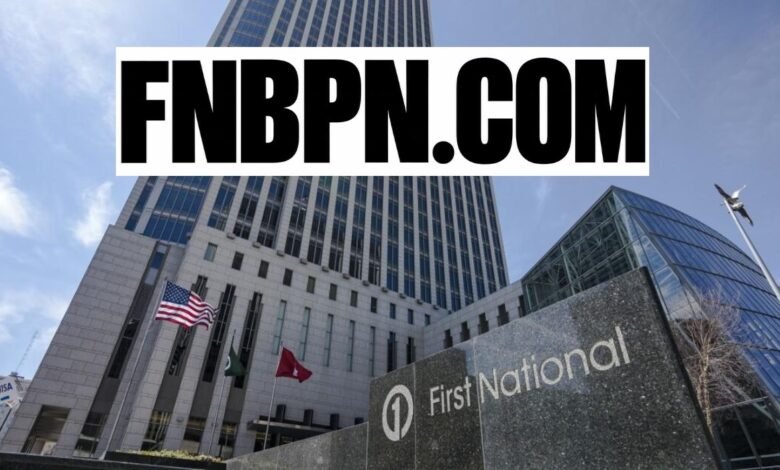
The story of fnbnp.com begins in North Platte, Nebraska, where First National Bank North Platte opened its doors in 1886. At a time when local communities depended heavily on agriculture, rail transportation, and small businesses, the bank became part of the financial foundation that helped the region grow.
Over the years, the institution served generations of customers. Farmers relied on banking services to manage seasonal expenses, families used accounts to save money, and business owners turned to local bankers when they needed financing. What began as a community banking institution gradually developed into a regional operation with locations across western Nebraska.
Today, people searching for fnbnp.com often want to understand the bank’s history, its former branches, and its relationship with First National Bank of Omaha, widely known as FNBO. The bank no longer operates as a separate institution under its original identity, but its history remains an important part of Nebraska’s banking story.
Looking back at its development reveals how a local bank adapted to changing communities, expanded its reach, and eventually became part of a larger financial organization.
Quick Info About fnbnp.com
| Category | Details |
|---|---|
| Bank Name | First National Bank North Platte |
| Founded | 1886 |
| Headquarters | North Platte, Nebraska, USA |
| Merged Into | First National Bank of Omaha (FNBO) |
| Merger Date | March 31, 2014 |
| Industry | Banking and Financial Services |
How First National Bank North Platte Began
First National Bank North Platte was organized on March 9, 1886, and opened for business on May 10 of the same year. North Platte was developing into an important community in western Nebraska, and residents needed reliable places to deposit money, obtain credit, and manage their finances.
The bank entered the community at a time when personal relationships mattered greatly in financial dealings. Customers often preferred working with people who understood their businesses and the challenges of the local economy. A community bank could offer that familiarity while providing the financial services residents needed.
Agriculture was particularly important to the surrounding region. Farmers had to manage the costs of seeds, equipment, livestock, and land while dealing with seasonal income. Local merchants faced different challenges, including purchasing stock, paying employees, and keeping their businesses running throughout the year.
A dependable banking institution could help these customers manage their money and plan for future expenses. First National Bank North Platte gradually established its place in this environment.
Its early history was not about becoming a national financial giant overnight. Instead, the institution developed through its connection with the people and businesses it served. That local foundation would remain an important part of its identity as the bank expanded in later decades.
READ THIS TOO: Fmbankia.com: A Complete Guide to Online Banking and Financial Services
Growing With the North Platte Community
As North Platte developed, the needs of its residents changed. More businesses required financial support, families needed convenient banking services, and agricultural customers continued looking for ways to manage their expenses.
First National Bank North Platte grew alongside the community. Its development reflected the changing role of banks in American life, from institutions primarily associated with deposits and lending to organizations offering a broader range of financial services.
The bank also changed its physical location as its operations developed. During its history, it occupied three different locations in downtown North Platte before moving to its main office at 201 North Dewey Street in September 1967.
The move marked an important stage in the institution’s development. A central office provided a home for its banking operations and reflected its continuing presence in the city.
The bank later invested in its facilities again. In 1998, a major remodeling and construction project doubled the size of its main building. The expansion demonstrated the importance the institution placed on its physical facilities as its operations evolved.
These changes help explain why the history of fnbnp.com is closely connected to North Platte itself. The bank’s development followed the needs of the community rather than taking place in isolation.
Expanding Beyond Its Original Home
For many years, First National Bank North Platte focused on serving its home community. Eventually, its operations extended into other parts of western Nebraska.
An important change occurred on October 15, 1988, when First National of Nebraska acquired First National Bank and Trust Company of North Platte. The acquisition connected the local institution with a larger banking organization and created a foundation for further regional development.
Between 1989 and 1994, the bank added locations in communities including Alliance, Chadron, and Scottsbluff. These locations allowed it to serve more households, businesses, and agricultural customers across western Nebraska.
Each community had its own financial needs. A family might need a checking account for everyday expenses, while a small business owner might require financing to purchase equipment or expand operations. Farmers often faced seasonal expenses that demanded careful financial planning.
By extending its presence into additional communities, the bank could serve customers who lived beyond North Platte. Its regional network also reflected a wider trend in the banking industry, where established institutions increasingly expanded through acquisitions and partnerships.
For people researching fnbnp.com, this period is particularly significant. It shows how the bank moved beyond its original community while retaining its regional identity.
The Story Behind Its Branch Locations
Physical branches played an important role in the bank’s development. Before online and mobile banking became common, customers generally needed to visit a banking office to complete many routine transactions.
First National Bank North Platte responded to local growth by developing its branch network. In 1972, it opened a South Bank location at The Mall to serve the surrounding commercial and residential area.
This second North Platte location gave customers another place to conduct their banking business. It also reflected the growth of commercial activity beyond the city’s traditional downtown center.
The institution’s later expansion brought banking services to communities such as Alliance, Chadron, and Scottsbluff. These locations helped customers access financial services closer to home.
A branch was more than a building where people deposited checks or withdrew cash. For many customers, it was also a place to discuss a loan, ask questions about an account, or seek help with a financial decision.
Although banking technology has reduced the need for some in-person transactions, physical branches remain important to many customers. The historical locations associated with fnbnp.com illustrate how banks once relied on a local network of offices to maintain close relationships with the communities they served.
Because the bank later merged into another institution, historical branch addresses should not automatically be treated as current operating locations.
When First National Bank North Platte Became Part of FNBO
One of the biggest changes in the bank’s history came in 2014.
First National of Nebraska announced plans to bring several affiliated banking institutions together under a unified banking structure. The move included First National Bank North Platte and other institutions operating under separate names.
On March 31, 2014, First National Bank North Platte was merged into First National Bank of Omaha. The former institution ceased operating as a separate bank, and its history became part of the broader FNBO organization.
The consolidation reflected changes taking place throughout the American banking industry. Larger organizations were bringing affiliated banks together to simplify their structures, coordinate operations, and offer customers access to a wider range of services.
For customers, a merger can raise practical questions about account access, branch arrangements, and the name appearing on banking documents. These details depend on the specific transition and the services involved.
The important distinction is that First National Bank North Platte and FNBO are not two separate banks operating under the same historical name. The former North Platte institution became part of FNBO through the 2014 merger.
That connection explains why people searching for fnbnp.com may encounter historical records alongside information about First National Bank of Omaha.
Banking Services and the Needs of Local Customers
Throughout its history, First National Bank North Platte served customers with a range of traditional banking needs. Personal accounts, business banking, and lending formed important parts of the community banking model.
Checking accounts helped customers manage everyday payments, while savings accounts provided a way to set aside money for future expenses. These basic services supported households with different incomes and financial goals.
Lending was equally important. Businesses sometimes needed money to purchase equipment, increase inventory, or finance expansion. Agricultural customers faced expenses tied to planting, harvesting, livestock, and farm operations. Households also needed access to financing for major purchases and other personal requirements.
A regional bank could help customers evaluate their options and select financial products suited to their circumstances. Local knowledge was particularly valuable when customers faced challenges connected to the economy of western Nebraska.
Following the consolidation, FNBO continued to provide banking services through its broader organization. Its current offerings include personal banking, business banking, lending, and digital financial services.
However, it is important to distinguish the services available through FNBO today from the specific products offered by First National Bank North Platte in earlier years. Banking products, eligibility requirements, fees, and account terms can change over time.
How Banking Changed Over the Years
When First National Bank North Platte opened in 1886, banking looked very different from what customers experience today. Paper records, face-to-face transactions, and physical banking offices played central roles in everyday financial activity.
Customers generally needed to visit a branch to handle many routine matters. Bank employees processed transactions, maintained account records, and worked directly with customers who needed assistance.
Technology gradually changed those routines. Computerized systems made it easier for banks to manage records and process transactions. Electronic payments reduced the need to handle every financial transaction in person, while automated teller machines gave customers additional ways to access cash.
Online banking brought another major change. Customers could begin checking balances, reviewing transactions, and managing eligible accounts from home or work.
Mobile banking extended those services to smartphones. Depending on the bank and account, customers can now perform tasks such as reviewing account activity, transferring funds, paying bills, and depositing eligible checks remotely.
These developments show how the banking industry has adapted to modern expectations. The history associated with fnbnp.com spans a period in which banking moved from paper-based transactions toward increasingly digital services.
Today, customers looking for current online banking access should verify the official FNBO website rather than assume that the former bank’s domain provides the correct destination.
Why the History of fnbnp.com Still Matters
The history of a local bank can reveal a great deal about the community around it. Banks often grow as businesses expand, populations change, and residents look for new financial opportunities.
First National Bank North Platte provides an example of this relationship. Its early years were tied to the financial needs of North Platte, while its later expansion brought services to other communities across western Nebraska.
Its story also illustrates how banking organizations change over time. A bank can develop a strong local identity and later become part of a larger institution through an acquisition or merger.
That transition does not make its earlier history irrelevant. Former customers, local historians, researchers, and people interested in Nebraska businesses may still need to understand the institution’s original name and the role it played in the region.
The history of fnbnp.com is therefore useful for more than identifying an old website domain. It provides a way to understand the development of a financial institution that served its community for well over a century.
What People Should Know About fnbnp.com Today
Anyone researching fnbnp.com should keep one important detail in mind: First National Bank North Platte merged into First National Bank of Omaha in 2014 and no longer operates as a separate banking institution under its former identity.
This matters for people searching for old branch addresses, account information, or online banking services. Historical business listings may describe locations and arrangements that have changed since the merger.
People who need current banking information should verify branch availability, contact details, and service options through official FNBO resources.
Anyone accessing a financial account should also check that the website is legitimate before entering a username, password, or verification code. An old domain name appearing in a business listing does not automatically establish that it is the correct place to sign in today.
For historical research, however, the name remains useful. It helps connect records from North Platte’s past with the larger banking organization that followed.
READ THIS TOO: What Is Grandpeoples.com? A Complete Guide to Its Features and Content
Conclusion
The story of fnbnp.com reflects the long history of First National Bank North Platte, which opened its doors in 1886 and became part of the financial life of western Nebraska.
Over the decades, the bank expanded its facilities, opened additional locations, and served customers across several communities. Its work supported individuals, families, businesses, and agricultural customers whose financial needs changed alongside the regional economy.
The 2014 merger into First National Bank of Omaha marked the end of its existence as a separate institution. It also connected the bank’s local history with the wider FNBO organization.
Today, the name First National Bank North Platte remains relevant to people researching Nebraska’s banking history. Understanding its origins, growth, and eventual consolidation provides a clearer picture of how community banking has evolved.
For anyone exploring fnbnp.com, the most important takeaway is that the domain is associated with a historic banking institution whose legacy continues as part of a larger story about local communities, financial services, and the changing nature of American banking.





One Comment