

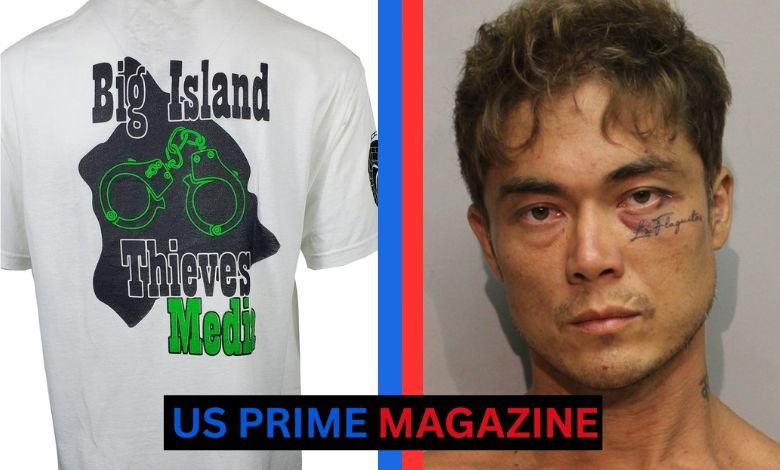
Big Island Thieves is a community crime watch platform that helps Hawaii Island residents stay informed about theft, suspicious activity, and local safety concerns. What started as a Facebook group has become a familiar name among people who want quick updates about events in their neighborhoods.
The platform gained attention during the May 2026 Puna triple-homicide investigation involving Jacob Daniel Baker. As police searched for the suspect, residents followed updates and shared information about the case.
Today, Big Island Thieves represents a growing trend in local journalism. It shows how ordinary people can use social media to share news, raise awareness, and help their communities stay connected.
Quick Info About Big Island Thieves
| Details | Information |
|---|---|
| Name | Big Island Thieves |
| Type | Community Crime Watch Platform |
| Location | Hawaii Island, United States |
| Reported Founded | February 2016 |
| Main Platform | |
| Founder | Not publicly confirmed |
| Main Purpose | Crime Awareness and Public Safety |
| Coverage Areas | Hilo, Puna, Pāhoa, Kona, and Keaʻau |
| Content | Crime Reports, Missing Persons, Local Alerts |
| Notable Coverage | 2026 Puna Triple-Homicide Case |
| Reporting Style | Community-Based Citizen Journalism |
What Is Big Island Thieves?
Big Island Thieves is an online community where Hawaii residents share information about crime and neighborhood safety. Its main purpose is to help people learn about suspicious activity, stolen property, and local incidents.
Residents use the platform to discuss events happening around them. Some share security camera footage, while others post photographs or information about missing belongings.
The group also provides space for community discussions. People can exchange updates and learn about problems affecting nearby neighborhoods.
Unlike traditional news outlets, Big Island Thieves relies heavily on information contributed by residents. This allows news to spread quickly, although important claims still need verification.
READ THIS TOO: What Is Samigo App? Powerful Features, Key Benefits, and How It Works
How Big Island Thieves Started
Big Island Thieves reportedly began in February 2016. Its early focus was property theft and the challenges residents faced in protecting their belongings.
Hawaii Island has many rural communities. Some homes sit far from busy roads, shopping centers, and police stations.
These distances can make neighborhood communication difficult. Residents wanted a convenient way to warn others about theft and suspicious behavior.
Facebook offered a simple solution. People could post photographs, describe incidents, and ask neighbors to watch for missing property.
Early discussions included stolen tools, vehicles, construction equipment, and household items.
As more residents participated, the group became a recognizable place for local crime-related discussions.
Who Founded Big Island Thieves?
The original founder of Big Island Thieves has not been clearly identified in reliable public information.
The platform developed around a shared interest in neighborhood safety. Its identity became closely connected to the residents who contributed information and followed local reports.
Running a crime watch group also involves responsibility. Administrators must consider privacy, misleading posts, and accusations against individuals.
These issues become more important as a community grows. A post that reaches thousands of people can influence public opinion before authorities confirm the facts.
Despite the limited information about its founding leadership, Big Island Thieves remains associated with community participation and local awareness.
How Big Island Thieves Became Popular
Big Island Thieves attracted attention because it focused on problems that mattered to local residents.
People wanted to know about stolen vehicles, missing equipment, suspicious visitors, and police activity near their homes.
The platform made those discussions easier. Instead of waiting for a newspaper report, residents could share their experiences directly.
Its audience was already substantial by 2017. Honolulu Civil Beat reported that the BigIslandThieves Facebook group had more than 30,000 members at that time.
The growing membership showed how strongly residents valued neighborhood information.
Over time, discussions expanded beyond theft. Community members also shared information about missing people, road problems, and public safety concerns.
This wider coverage helped establish Big Island Thieves as more than a place to report stolen property.
Big Island Thieves and the Puna Triple-Homicide Case
Big Island Thieves received renewed attention during the Puna triple-homicide investigation in May 2026.
Police investigated the deaths of three men in separate locations across the Puna district.
The victims were Robert Shine, 69, John Carse, 69, and Chitta Morse, 79.
Investigators examined crime scenes near Papaya Farms Road and Kalapana-Kapoho Beach Road.
Authorities identified Jacob Daniel Baker, a 36-year-old resident of Pāhoa, as a suspect.
The investigation created serious concern across nearby communities. Residents wanted updates about the search and information about their safety.
Online crime watch discussions became one way people followed developments.
The case also showed why official information matters. During an active investigation, rumors can spread before police confirm important details.
How Police Captured Jacob Baker
Police arrested Jacob Baker on May 28, 2026, following a search in the Kalapana area.
Surveillance footage played an important role in the investigation. It showed a man resembling Baker hiding in a vacant lot and ducking when vehicles passed.
Witnesses also provided information about his movements.
Investigators searched the surrounding area and eventually found Baker hiding inside a small cave on a neighboring property.
Officers arrested him without further incident.
Several law enforcement agencies assisted with the operation. Police also acknowledged the help of residents who shared information.
The case demonstrated how community tips and security footage can support police investigations.
However, authorities did not establish that Big Island Thieves alone was responsible for locating Baker.
What Happened After Jacob Baker’s Arrest?
Following Baker’s arrest, police announced several criminal charges on May 30, 2026.
These included one count of first-degree murder and three counts of second-degree murder.
Authorities also filed charges involving burglary, theft, unauthorized vehicle use, and property damage.
Baker was scheduled to appear in Hilo District Court on June 1, 2026. The murder charges carried no bail.
The case continued through the legal system, attracting attention from residents and local news organizations.
For people following developments online, official police statements and court records remained important sources of information.
Criminal charges are allegations, and the legal process determines whether prosecutors can prove them.
What Kind of News Does Big Island Thieves Share?
Crime reporting remains central to Big Island Thieves, but community discussions can cover other local concerns.
Residents may share information about missing people, road incidents, suspicious activity, and public safety warnings.
Stolen vehicles and equipment are common subjects for neighborhood crime watch discussions. Photographs and descriptions can help other residents recognize missing property.
Missing-person alerts are another important topic. Sharing official notices can help information reach people in different parts of the island.
Weather and natural hazards also matter to Hawaii residents. Earthquakes, heavy rainfall, flooding, and volcanic activity can affect roads and neighborhoods.
Community posts may help people learn about these situations, although official emergency agencies remain the best sources for safety instructions.
Why Big Island Thieves Matters to Hawaii Residents
Hawaii Island covers a large geographical area. Many communities are separated by long roads, rural properties, and undeveloped land.
This makes local communication especially useful.
A resident in Puna may learn about suspicious activity reported in another neighborhood. Someone in Hilo might recognize a stolen vehicle mentioned online.
The platform allows people to exchange information across these distances.
It also gives residents a voice in discussions about neighborhood safety.
For people who live in remote areas, knowing what others have experienced can help them make practical decisions about protecting their property.
Still, every report deserves careful consideration. An online accusation should never replace proper investigation.
How Big Island Thieves Changed Local Reporting
Traditional news organizations usually verify information before publishing detailed reports.
Big Island Thieves follows a more immediate community-based approach.
Residents can share observations soon after an incident occurs. Other users may respond with additional information or direct readers toward official updates.
This creates faster communication, particularly for smaller neighborhood incidents.
However, speed has limitations.
A photograph may not explain the full situation. A witness might misunderstand an event, and an early report may contain incorrect details.
Community journalism works best when people confirm important information before sharing it.
Big Island Thieves shows how social media can support local awareness without replacing professional journalism.
Challenges Facing Big Island Thieves
One major challenge for community crime watch platforms is misinformation.
A post can spread quickly even when the original details are incomplete. This becomes especially serious when someone publicly accuses another person of theft or criminal activity.
Mistaken identification can harm reputations and create conflict.
Privacy is another concern. Sharing personal addresses, photographs, or sensitive information can expose people to unwanted attention.
Frequent crime posts may also make residents feel less safe than official statistics suggest.
Seeing several incidents online does not automatically mean crime is increasing across the entire island.
These challenges make responsible posting and careful moderation important.
Residents benefit most when discussions focus on verified information rather than rumors or personal accusations.
Is Big Island Thieves a Reliable News Source?
Big Island Thieves can provide useful local observations, but its reliability depends on the information shared in each post.
Some reports may include genuine security footage or firsthand accounts. Others may contain assumptions or details that authorities have not confirmed.
Readers should compare important claims with official police announcements and established news coverage.
This is especially necessary for arrests, missing-person cases, and ongoing investigations.
The platform can help residents discover what is happening nearby. Verification helps them understand what actually happened.
Using both community updates and trusted sources offers a more balanced picture of local events.
The Future of Big Island Thieves
Big Island Thieves reflects how social media has changed local communication.
Residents no longer depend entirely on newspapers or television to learn about neighborhood incidents.
They can exchange information, share observations, and follow developing situations through online communities.
This approach has clear advantages, particularly in rural areas where people may live far apart.
However, its long-term usefulness depends on accurate information and responsible participation.
As community reporting continues to evolve, platforms like Big Island Thieves may remain important spaces for local discussion.
Their strongest contribution comes from connecting residents while encouraging them to verify information and respect others.
READ THIS TOO: Physics Fundamentals: The Essential Guide to How the World Works
Final Thoughts
Big Island Thieves has become a recognizable community crime watch platform on Hawaii Island. From its early focus on stolen property to wider discussions about local safety, it reflects the growing role of social media in neighborhood communication.
The 2026 Puna triple-homicide investigation brought additional attention to community information sharing and the value of public cooperation with police.
Although online crime reports require careful verification, Big Island Thieves offers residents a convenient way to discuss local concerns.
Its story shows how a community-focused Facebook group can become part of the way people follow news, protect their neighborhoods, and stay connected across Hawaii Island.

One Comment